Need Immediate Line Testing for Water Leak Detection?
Speak directly with a diagnostic coordinator to evaluate pipe symptoms and schedule dispatch.
Recognizing Water Leak Detection Symptoms
Concealed plumbing ruptures produce telltale physical and acoustic indicators before visible puddling occurs. Detecting these warning signs early prevents extensive secondary wood decay, foundation soil erosion, and costly drywall remediation:
- Continuous hissing or rushing sounds behind bathroom or laundry drywall with fixtures closed
- Unexplained monthly spikes on municipal water utility meter billing statements
- Damp baseboard edges, spongy subflooring, or peeling paint along interior walls
- Water meter low-flow leak indicator dials spinning continuously while all taps remain shut
If you suspect an active pipe breach, shut off your main interior water valve immediately to stop hydraulic pressure from feeding the leak. Then call 877-401-1235 to arrange electronic acoustic testing before water saturates subgrade soils.
Our Four-Stage Diagnostic & Repair Process
Every inspection adheres to systematic non-destructive procedures to locate hidden pipe failures without blind property demolition.
Static system pressure decay testing to isolate whether hot or cold distribution lines are compromised
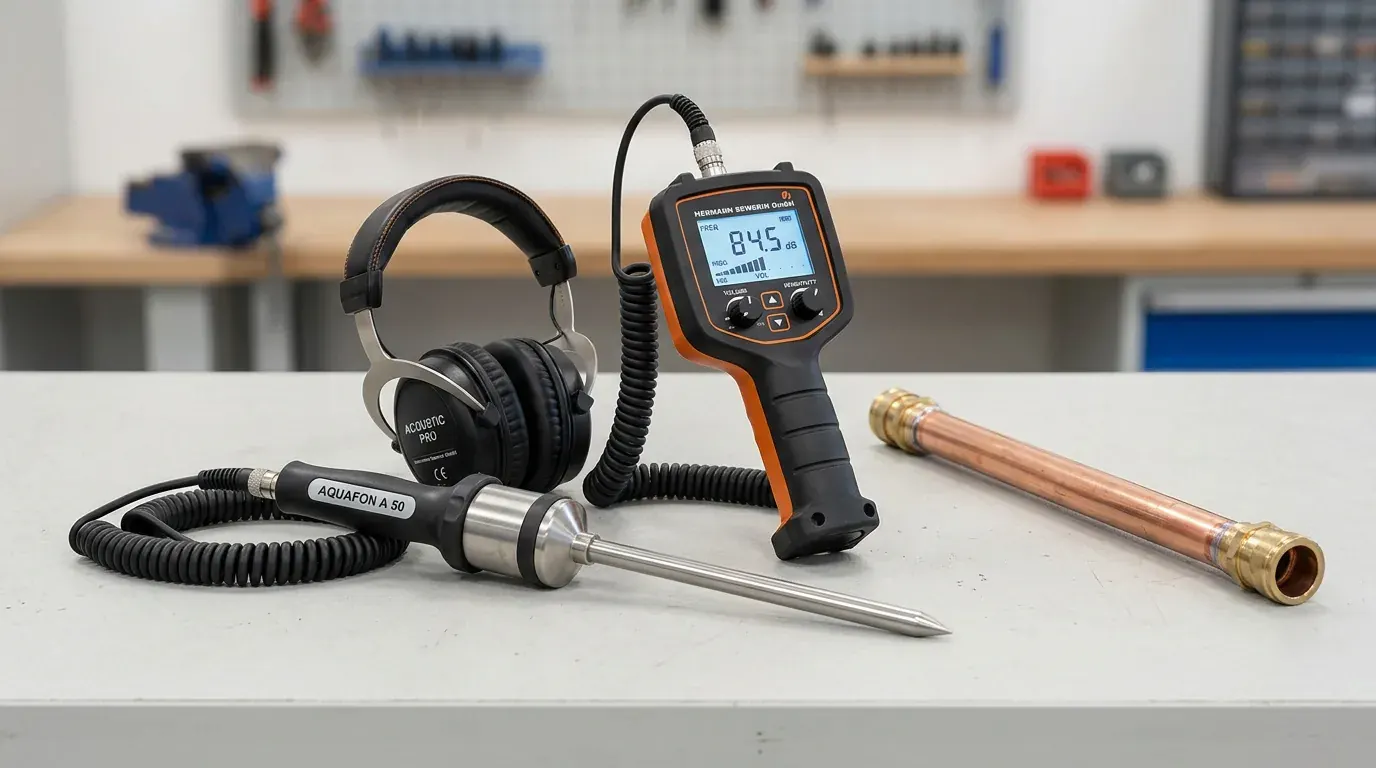
Acoustic listening disc mapping across wall chases to trace escaping water sound frequencies
Infrared thermal imaging inspection to identify evaporative cooling footprints along pipe pathways
Minimal non-destructive access portal cut directly at the confirmed breach coordinate for line repair
Frequently Asked Questions: Water Leak Detection
Pressurized water escaping a pipe fissure creates high-frequency structural vibrations. Sensitive contact microphones filter ambient room sounds to pinpoint the loudest vibration point, locating the breach within a single square inch.
Damp musty odors along baseboards, localized discoloration on drywall, and small unexplainable spikes on your water meter dial are the earliest indicators of pinhole corrosion before water pools visibly.
Cold water escaping inside walls creates subtle evaporative cooling that thermal sensors clearly distinguish from dry surrounding insulation, mapping the water path back to the origin.
Movement on the meter indicator with all indoor fixtures closed proves pressurized water is escaping somewhere in the plumbing network, indicating an active supply line rupture.
Electronic acoustic sensors and infrared scanners operate directly through wall surfaces, locating pipe fissures before any physical access cut is made.
A hairline crack measuring one-sixteenth of an inch under standard sixty-PSI household pressure can release over eight hundred gallons of water in twenty-four hours.
Thin-wall type M copper tubing exposed to acidic or hard municipal water is especially prone to localized pitting corrosion, resulting in microscopic pinhole leaks.
Locate and rotate your main interior ball valve clockwise ninety degrees to halt supply pressure, then contact a diagnostic technician to arrange electronic acoustic mapping.
Need Immediate Water Leak Detection?
Concealed water leaks threaten structural framing and erode foundation subsoils every hour they run. Call 877-401-1235 now to coordinate non-invasive diagnostic testing.
Call 877-401-1235